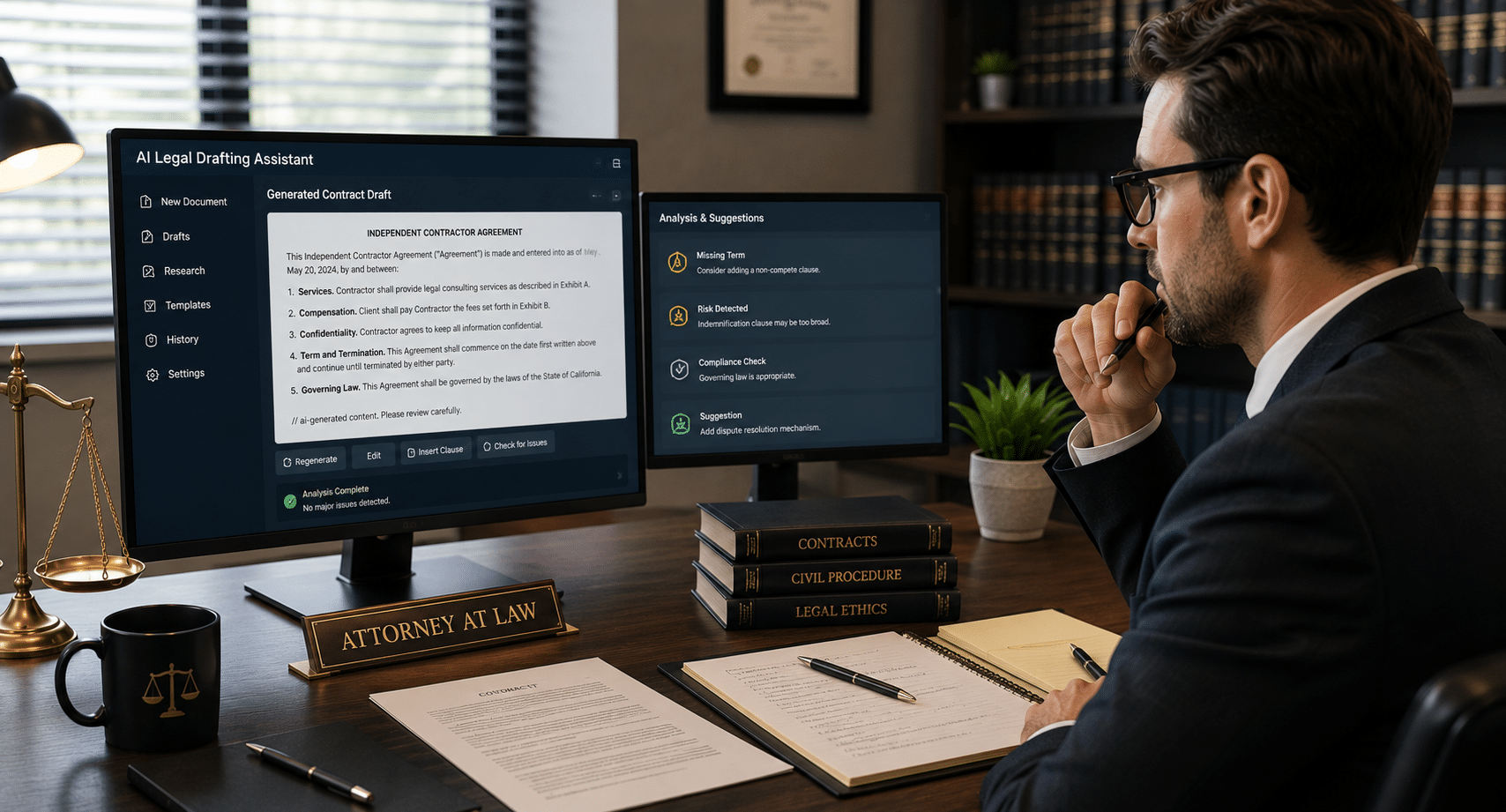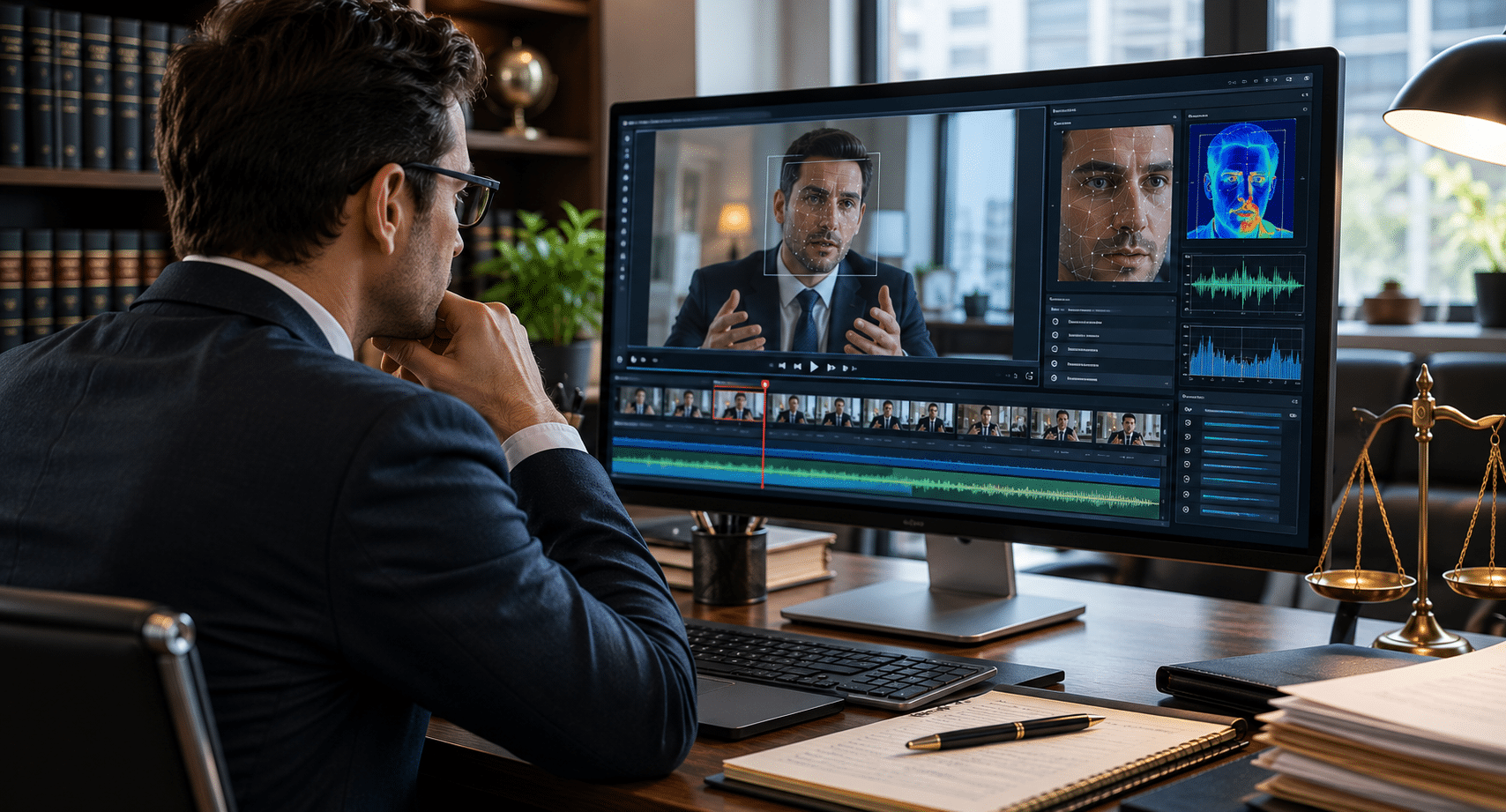
Photos, videos, and audio recordings have long played an important role in litigation. Generative artificial intelligence is making those forms of evidence more complicated. Modern AI tools can create convincing images, cloned voices, synthetic video, and altered recordings that depict events that never occurred. For lawyers, this means that seeing or hearing something in a digital file may no longer be enough to assume that it is authentic.
Deepfake evidence presents two related problems. A fabricated recording could be presented as genuine evidence, while an authentic recording could be challenged simply because sophisticated manipulation is now possible. Lawyers therefore need to think about authentication, preservation, metadata, chain of custody, forensic examination, discovery, and corroborating evidence much earlier in a case.
The issue is becoming particularly important in 2026 as courts and rulemakers consider how existing evidentiary principles apply to AI-generated material. Law firms already establishing artificial intelligence policies should also consider the broader governance issues discussed in how advanced AI risk controls are becoming mandatory in law firms, because AI risk management increasingly extends beyond drafting tools and into the evidence lawyers receive from clients and opposing parties.
What Is Deepfake Evidence?
A deepfake is synthetic or manipulated media created with artificial intelligence to make a person appear to say or do something that did not actually occur. The technology can affect photographs, video recordings, voices, and other digital material.
Manipulated evidence itself is not new. Courts have long encountered altered photographs, forged documents, edited recordings, and fabricated physical evidence. What has changed is the accessibility and sophistication of the technology. Generative AI can make realistic alterations without requiring the advanced editing skills that would once have been necessary.
The American Bar Association has examined deepfakes in court, including the growing difficulty of determining whether digital media accurately represents what actually occurred.
Why Deepfakes Are Different From Traditional Evidence Problems
Traditional manipulation often leaves visible signs. An edited photograph might contain inconsistent lighting, unusual edges, or obvious changes. A recording might have detectable cuts. Modern synthetic media can be substantially more convincing.
AI systems can imitate facial movements, voices, expressions, backgrounds, and speech patterns. A fabricated recording may therefore look plausible even to someone familiar with the person shown in it.
This creates a practical challenge for attorneys. Visual inspection alone may not be sufficient. Important digital evidence may require technical examination before a lawyer relies on it in negotiations, motion practice, mediation, arbitration, or trial.
How Deepfakes Affect Evidence Authentication
 Authentication generally requires a party offering evidence to establish that the item is what the party claims it to be. Federal Rule of Evidence 901 addresses this foundational requirement in federal proceedings.
Lawyers can review the current rule directly through Federal Rule of Evidence 901.
For conventional digital evidence, authentication may involve testimony from someone with knowledge, distinctive characteristics, records showing how a file was created, or other evidence establishing its origin. AI-generated media complicates this analysis because realistic content can potentially be fabricated without the event shown in the recording ever taking place.
The federal judiciary has acknowledged the issue. In 2026, the Judicial Branch reported that AI-generated and AI-processed evidence raises questions involving authentication, reliability, and the foundations necessary for admission.
Metadata May Become More Important
Metadata can provide information about a digital file, such as when it was created, the device or software associated with it, modification history, or other technical characteristics. Lawyers dealing with disputed digital evidence should consider preserving original files rather than relying exclusively on screenshots, compressed copies, or files downloaded from social media.
However, metadata should not automatically be treated as conclusive proof. Metadata can sometimes be altered, removed, or changed when a file passes through different platforms. It should generally be evaluated together with other evidence about the file’s history and origin.
Digital preservation practices also intersect with cybersecurity. Law firms handling sensitive electronic evidence may want to review Cybersecurity and Privacy Law: Protecting Your Digital Rights in California for additional background on protecting digital information.
Chain of Custody for Digital Files
A clear chain of custody can help establish what happened to evidence after it was collected. Lawyers should document where an important file came from, who received it, where the original is stored, whether copies were created, and what forensic work was performed.
Hash values can also help identify whether a digital file has changed. A cryptographic hash functions like a digital fingerprint. If the underlying file changes, its hash value generally changes as well. Recording hash values during collection and forensic review may therefore help establish file integrity.
The Growing Role of Digital Forensic Experts
Lawyers should be cautious about trying to determine authenticity through visual inspection alone. When a recording is important to a case and there is a legitimate reason to question its origin or integrity, a qualified digital forensic professional may be able to examine the original file, metadata, encoding characteristics, audio, frames, and other technical information.
The ABA has noted that digital forensics may play a larger role as deepfake technology becomes more sophisticated. Its 2026 discussion of deepfakes recommends treating important audio and video as forensic artifacts and documenting verification efforts.\
Expert involvement may also become relevant when explaining complicated technical evidence to a judge or jury. The expert’s methodology, qualifications, and conclusions may themselves be subject to evidentiary challenges, so lawyers should consider these issues early rather than waiting until immediately before trial.
AI Detection Software Is Not a Complete Answer
Deepfake detection tools may assist an investigation, but attorneys should be careful about treating an automated detection score as definitive proof. AI generation systems and detection systems are both evolving. A detector may produce false positives or fail to recognize material generated with a newer technique.
A more defensible approach may combine multiple forms of evidence: original file analysis, metadata, hashes, source-device information, witness testimony, contextual evidence, forensic examination, and corroborating records.
This principle resembles the broader approach lawyers should take when using AI-generated work product. As explained in How Advanced AI Risk Controls Are Becoming Mandatory in Law Firms, human oversight and verification remain important when automated systems influence legal work.
The Opposite Problem: Claiming Real Evidence Is Fake
Deepfakes create another challenge sometimes described as the liar’s dividend. Once people know realistic recordings can be fabricated, a person confronted with genuine evidence may argue that the material was generated or manipulated by AI.
This means lawyers may need to establish authenticity proactively even when they have no reason to believe a recording is fake. Preserving original files, identifying the source, documenting collection, and obtaining corroborating evidence can help reduce later disputes.
The ABA has discussed situations in which deepfake arguments have been raised against allegedly authentic material, illustrating why lawyers should not view synthetic evidence solely as a problem involving fabricated files.
Deepfakes During Discovery
Discovery may become one of the most important stages for investigating questionable media. Attorneys may seek information about the source of a recording, the device used to create it, editing software, original files, cloud backups, communications surrounding the recording, and other versions of the material.
When AI generation or manipulation is genuinely at issue, technical discovery may also involve questions about how the evidence was produced or processed.
Lawyers should avoid making unsupported accusations that evidence is fake merely because deepfake technology exists. Challenges should have a factual and legal basis. At the same time, suspicious inconsistencies should not be ignored when evidence could materially affect the case.
Deepfakes Can Affect More Than Trials
The consequences of synthetic media can arise long before evidence reaches a jury. A convincing recording may influence settlement negotiations, internal investigations, insurance decisions, employment disputes, mediation, arbitration, or public perceptions surrounding litigation.
For example, a supposed audio recording of an executive making an admission could dramatically affect a business dispute. A manipulated video could influence a family law conflict. Synthetic voice recordings might appear in employment litigation or disputes involving alleged threats.
ABA commentary in 2026 has highlighted the potential for deepfakes to appear in civil litigation and administrative proceedings, not merely high-profile criminal trials.
Ethical Responsibilities When Lawyers Receive Suspicious Evidence
Lawyers should not knowingly submit fabricated evidence. When authenticity is uncertain, professional duties involving candor, competence, and fairness may become relevant.
An attorney who receives an extraordinary recording from a client should resist the temptation to immediately use it simply because it appears helpful. The circumstances surrounding its creation and preservation should be investigated, particularly when there are warning signs suggesting manipulation.
This is another reason law firms should establish procedures for emerging technology rather than addressing problems only after they occur. Broader operational issues that can expose firms and businesses to unnecessary risk are also discussed in Common Legal Mistakes to Avoid.
Practical Steps for Handling Potential Deepfake Evidence
There is no universal checklist that will resolve every authenticity dispute. However, lawyers handling important digital recordings can adopt practices that make later verification easier.
Preserve the Original File
Whenever possible, obtain the original digital file rather than only a screenshot, social media copy, or forwarded version. Avoid unnecessary conversion or editing.
Document the Source
Record who provided the evidence, when it was received, how it was transmitted, and what is known about the device or application that created it.
Preserve Metadata
Avoid workflows that unnecessarily strip metadata from potentially important evidence. When necessary, use appropriate forensic collection procedures.
Look for Corroborating Evidence
Other records may support or undermine a recording. Messages, location records, eyewitnesses, security footage, timestamps, documents, or independent recordings can provide important context.
Escalate Suspicious Media
If authenticity is material and there are credible warning signs, consider whether forensic examination is appropriate before relying on the evidence.
Document Verification
Maintain records showing what verification steps were performed. If authenticity is later challenged, the legal team should be able to explain its process.
How Law Firms Can Prepare for Deepfake Evidence
 Law firms do not need to assume every video is fraudulent. They do need a repeatable process for handling digital evidence whose authenticity may become important.
Firms can create internal procedures covering preservation, escalation, forensic review, expert retention, and documentation. Litigation teams should also receive basic training on synthetic media so they recognize warning signs and understand when technical assistance may be necessary.
Technology policies should extend beyond generative AI used for drafting. The same broader risk-management mindset applies to AI chatbots, document-generation systems, e-discovery tools, and digital evidence. For example, Legal Risks of Using AI Chatbots for Client Intake at Law Firms examines a different part of the AI lifecycle where confidentiality, accuracy, and human oversight also matter.
What Lawyers Should Watch in 2026
The rules surrounding AI-generated evidence are still developing. The Advisory Committee on Evidence Rules has been examining whether existing federal evidence rules adequately address deepfakes and other AI-related evidence problems. The federal judiciary has also noted the difficulty of creating technology-specific rules when AI capabilities change rapidly.
Lawyers should therefore follow developments in the jurisdictions where they practice rather than assuming one procedure applies everywhere. Court rules, standing orders, evidentiary decisions, professional responsibility guidance, and technical standards may continue to evolve.
Final Thoughts
Deepfake technology does not make photographs, recordings, and videos useless as evidence. It does mean that lawyers may need to approach important digital media with greater care.
Authentication increasingly requires thinking beyond what a recording appears to show. Source information, original files, metadata, chain of custody, forensic analysis, corroboration, and expert testimony may all become relevant when authenticity is genuinely disputed.
The challenge also works in both directions. Lawyers must be prepared to identify fabricated material without allowing the mere existence of AI to become an excuse for dismissing genuine evidence. Developing reliable preservation and verification practices now can help law firms navigate that balance as courts continue adapting evidentiary rules to synthetic media.