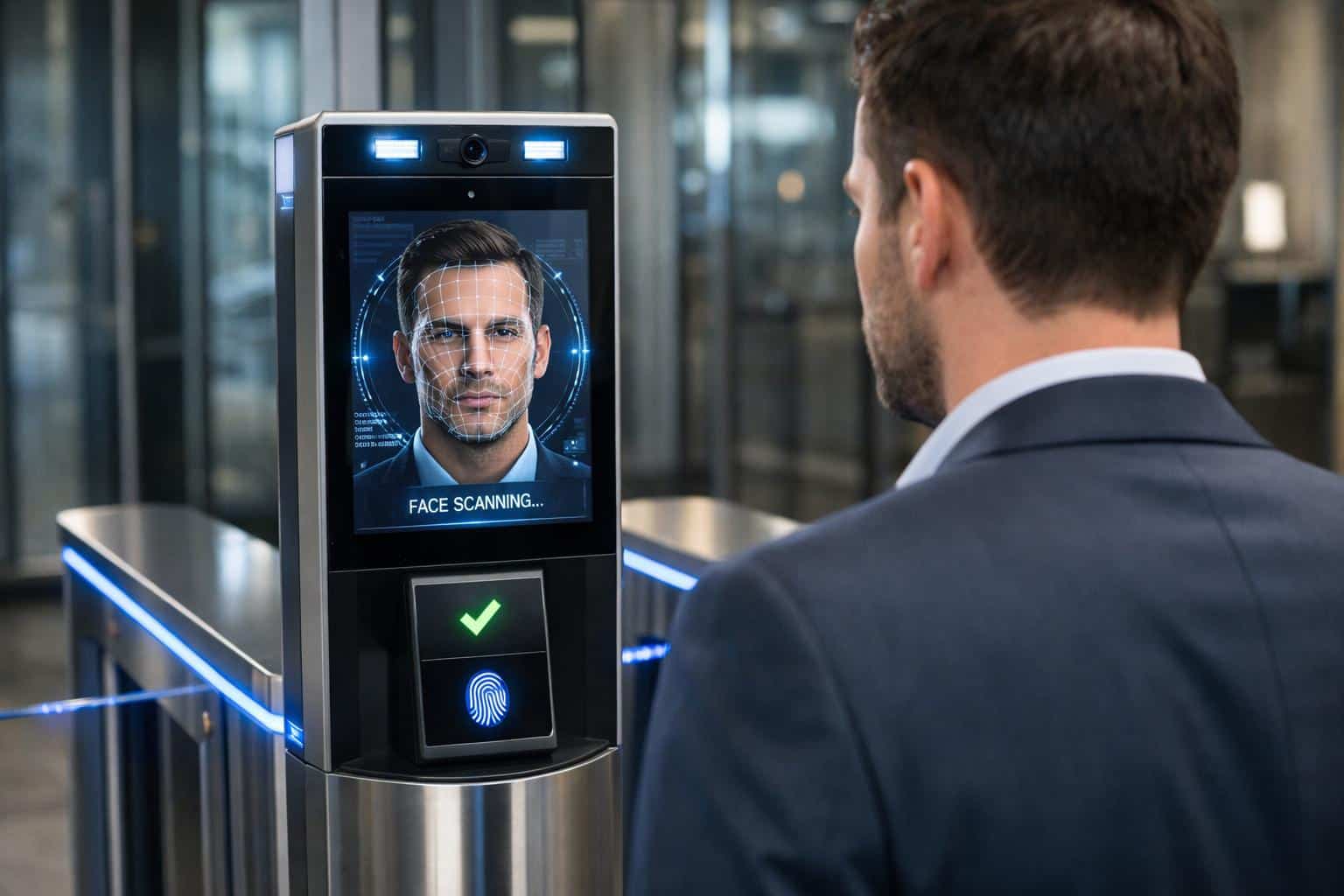
Facial recognition, fingerprint scanners, voice authentication, and other biometric technologies are becoming increasingly common in workplaces, financial services, smartphones, and public-facing businesses. These systems can improve security and convenience, but they also raise important questions about how personal information is collected, stored, shared, and protected.
Unlike a password, a person’s fingerprint or facial characteristics cannot easily be changed after a security incident. This makes biometric information particularly sensitive when it is used to identify or authenticate individuals.
Biometric data privacy laws establish different requirements depending on the state, the organization collecting the information, and the purpose of the technology. Some laws require notice or consent, while others regulate retention, disclosure, security, and consumer access rights.
Understanding these requirements can help consumers and employees recognize potential privacy concerns and determine what legal protections may apply.
What Is Biometric Data?
Biometric data generally refers to information derived from physical, physiological, or behavioral characteristics that can be used to identify or verify a person.
Common examples include:
- Fingerprints and fingerprint templates
- Facial geometry and facial recognition templates
- Iris and retina scans
- Voiceprints used for speaker identification
- Hand geometry measurements
- Certain behavioral identification patterns
Not every photograph, audio recording, or physical characteristic automatically qualifies as regulated biometric information. Legal definitions differ among statutes, and some laws distinguish ordinary photographs from biometric identifiers derived through technical processing.
For example, a company may store an employee photograph for identification purposes without necessarily creating a facial recognition template. When software analyzes facial geometry to identify that employee, additional biometric privacy considerations may arise.
Biometric Identification vs. Authentication
Biometric identification attempts to determine who someone is by comparing their characteristics against stored information.
Biometric authentication, by contrast, attempts to confirm that a person is who they claim to be.
Both processes may involve sensitive personal information, but the risks can differ. A system that compares one person’s fingerprint against a locally stored template may have a different privacy profile from a platform that searches millions of facial images.
Why Biometric Privacy Is Important
Biometric information can provide convenient security features. However, collecting and storing it may create risks that differ from those associated with ordinary account credentials.
A password can generally be reset after a breach. A person’s facial characteristics or fingerprints cannot be replaced in the same way.
Improperly secured biometric information may contribute to identity-related risks, unauthorized surveillance, or misuse of identification systems.
The Federal Trade Commission has warned about potential consumer harms involving biometric information, including privacy risks, security failures, and discriminatory outcomes.
These concerns also connect with broader issues discussed in Cybersecurity and Privacy Law: Protecting Your Digital Rights in California.
Biometric Data Privacy Laws in the United States
The United States does not have one comprehensive federal law governing every private-sector use of biometric information.
Instead, biometric privacy protections arise from a combination of state statutes, federal consumer protection rules, sector-specific requirements, and other applicable laws.
Some states have enacted laws specifically addressing biometric identifiers. Others regulate biometric information through broader consumer privacy frameworks.
As a result, a company’s obligations may depend on where it operates, where affected individuals reside, how information is collected, and whether statutory exemptions apply.
Illinois Biometric Information Privacy Act
Illinois has one of the most widely discussed biometric privacy statutes in the United States.
The Illinois Biometric Information Privacy Act, commonly known as BIPA, regulates certain private entities that collect, capture, purchase, receive, or otherwise obtain biometric identifiers or biometric information.
The law includes requirements concerning notice, written releases, retention schedules, disclosure, and reasonable protection of covered information.
The statute can be reviewed through the Illinois General Assembly’s Biometric Information Privacy Act.
Notice and Consent Requirements
Under BIPA, covered private entities generally must inform individuals in writing that biometric identifiers or information are being collected or stored.
They must also provide information about the specific purpose and length of time for which the information is collected, stored, and used, and obtain an appropriate written release before collection.
Whether a particular technology or organization falls within the law depends on the statutory definitions, exclusions, and relevant circumstances.
Retention and Destruction Policies
BIPA also requires covered private entities to develop a publicly available written policy establishing retention schedules and guidelines for permanently destroying biometric identifiers and information.
The law establishes statutory destruction requirements tied to the purpose of collection and specified time limits, subject to applicable legal obligations.
Businesses should avoid assuming that biometric information can be retained indefinitely simply because it may be useful in the future.
 Legal Claims Under BIPA
BIPA provides a private right of action for qualifying violations. Its remedies and liability framework have been the subject of substantial litigation and legislative changes.
Illinois amended the statute in 2024 to address certain damages calculations involving repeated collections or disclosures using the same method. Therefore, older descriptions of damages based on every individual scan may not accurately reflect the current statutory framework.
Anyone evaluating a potential BIPA claim should consider the applicable version of the statute, relevant dates, statutory requirements, and current case law.
California Biometric Privacy Protections
California regulates biometric information through its broader consumer privacy framework, including the California Consumer Privacy Act as amended by the California Privacy Rights Act.
Biometric information can qualify as personal information under California law, and certain biometric information processed for uniquely identifying a consumer is included within the statutory definition of sensitive personal information.
The precise obligations depend on whether a business is covered by the law, the information involved, the processing activity, and applicable exceptions.
The California Privacy Protection Agency provides official information about California privacy requirements and consumer rights.
Consumer Rights Involving Biometric Information
Eligible consumers may have rights to know about, access, correct, or delete certain personal information held by covered businesses, subject to statutory exceptions.
California law also provides rights concerning certain sales or sharing of personal information and specified uses or disclosures of sensitive personal information.
These rights are not absolute. A business may be permitted or required to retain information in certain circumstances, and particular statutory requirements apply to each type of request.
Consumers should review the business’s privacy notice and available request procedures to understand how to exercise applicable rights.
Biometric Time Clocks in the Workplace
Employers sometimes use fingerprint or facial recognition systems to record employee attendance, control access to facilities, or prevent timekeeping fraud.
Although these systems may serve legitimate operational purposes, they can raise privacy questions when workers are required to submit biometric identifiers.
Relevant considerations may include whether employees receive legally required notices, whether consent is necessary, how information is stored, and whether the employer or an outside vendor controls the biometric database.
Can an Employer Require Fingerprint Scanning?
The answer depends on the jurisdiction, applicable employment laws, the nature of the workplace, and the particular technology.
Some jurisdictions impose specific notice or consent requirements. Others regulate biometric information through general privacy, employment, or consumer protection laws.
Employers should evaluate applicable requirements before introducing a biometric timekeeping system.
Employees who have concerns about workplace technology may also benefit from understanding broader legal issues involving employee monitoring and digital privacy.
Facial Recognition in Stores and Public Spaces
Retailers, transportation facilities, entertainment venues, and other organizations may use facial recognition for access control, identity verification, or security-related purposes.
Such systems can raise questions about notice, accuracy, retention, and whether individuals are aware that their facial characteristics are being analyzed.
Facial recognition can also produce inaccurate results. False matches may lead to inappropriate suspicion, denied access, or other consequences.
The National Institute of Standards and Technology evaluates facial recognition technology, including performance characteristics and error rates.
Businesses should avoid treating a facial recognition match as infallible proof of identity.
What Happens When Biometric Data Is Breached?
A biometric data breach may expose information that cannot be replaced through an ordinary password reset.
The consequences depend on what information was compromised. For example, an encrypted biometric template may present different risks from raw images, unprotected identifiers, or authentication records linked to other personal information.
Businesses handling biometric information should consider security controls appropriate to the sensitivity of the data.
These may include encryption, access restrictions, retention limits, vendor oversight, monitoring, and incident-response procedures.
The NIST Cybersecurity Framework provides organizations with a structured approach to identifying and managing cybersecurity risks.
Do Businesses Have to Notify Consumers?
Breach notification obligations depend on the applicable laws, the type of information compromised, and whether statutory notification thresholds are satisfied.
Not every security incident involving biometric technology automatically triggers the same notification requirements.
Organizations should investigate the incident promptly and determine which state or federal rules may apply.
Can Consumers Sue for Biometric Privacy Violations?
Potential legal remedies vary significantly by jurisdiction.
Some biometric privacy statutes provide private rights of action. Other laws primarily rely on government enforcement or permit private claims only under specific circumstances.
A successful claim may require showing that a covered organization violated a particular statutory obligation. Depending on the law, questions involving notice, consent, retention, disclosure, injury, or statutory standing may be important.
Consumers should not assume that every collection of biometric information without their preferred form of consent automatically creates a valid lawsuit.
Likewise, businesses should not assume that a lack of demonstrated financial loss necessarily eliminates all potential liability.
Evidence That May Be Relevant
Individuals investigating a possible biometric privacy violation may want to preserve:
- Privacy notices and consent forms
- Employment policies
- Information about the biometric system
- Relevant communications with the organization
- Records of privacy requests
- Responses concerning data retention or deletion
- Security incident notifications
- Other documentation showing how the technology was used
The legal significance of these records depends on the claim and applicable law.
How Businesses Can Reduce Biometric Privacy Risks
Businesses considering biometric systems should evaluate whether the technology is necessary for the intended purpose and whether less intrusive alternatives are available.
A privacy assessment can help identify the information being collected, the purpose of processing, retention requirements, access permissions, and relevant legal obligations.
Establish Clear Collection Policies
Organizations should document which biometric identifiers are collected, why they are needed, and how they will be used.
Provide Appropriate Notices
Privacy disclosures should accurately explain relevant collection and processing practices. Where consent or a written release is required, businesses should establish a procedure that satisfies applicable law.
Limit Retention
Biometric information should not be retained longer than necessary or permitted under applicable requirements.
Secure Stored Information
Access should be limited to authorized personnel and systems. Appropriate encryption, authentication, and monitoring controls may reduce exposure.
Review Technology Vendors
Organizations should understand whether outside providers store, process, or access biometric information and what contractual and technical safeguards apply.
These considerations align with broader governance practices discussed in How Advanced AI Risk Controls Are Becoming Mandatory in Law Firms.
How Individuals Can Protect Their Biometric Information
Consumers cannot always avoid biometric systems, but they can take steps to understand how their information is handled.
- Review privacy notices before enrolling in biometric services.
- Ask whether a nonbiometric alternative is available.
- Understand whether biometric information is stored locally or remotely.
- Review available privacy and deletion rights.
- Use strong account security alongside biometric authentication.
- Monitor notices concerning security incidents.
- Preserve documentation when disputing improper data practices.
Biometric authentication should be viewed as one component of digital security rather than a complete substitute for other safeguards.
Emerging Biometric Privacy Issues in 2026
 Biometric privacy concerns are expanding as artificial intelligence becomes more integrated into identity verification, security systems, and consumer services.
Newer applications may combine facial recognition with behavioral analysis, automated identity checks, or large-scale data processing.
These technologies create questions about accuracy, transparency, secondary use, discrimination, and whether individuals have meaningful control over sensitive information.
Regulators and courts may continue to address these issues through existing privacy statutes, consumer protection laws, and new legislation.
Organizations should monitor developments in the jurisdictions where they operate rather than assuming that compliance with one state’s requirements is sufficient nationwide.
When Should Someone Seek Legal Advice?
Legal advice may be useful when a person believes biometric information was collected or disclosed in violation of applicable law, when an employer requires biometric identification, or when a security incident exposes sensitive personal data.
An attorney familiar with privacy law can evaluate the relevant statute, the organization’s practices, available documentation, and potential remedies.
Businesses may also benefit from legal review before implementing biometric systems, particularly when operating across multiple states.
Final Thoughts
Biometric technology offers convenient ways to verify identity and improve security, but it also creates distinctive privacy risks. Fingerprints, facial recognition templates, and voiceprints can be sensitive identifiers that require careful handling.
Biometric data privacy laws differ across the United States. Illinois provides specific statutory requirements for covered private entities, while California regulates biometric information through a broader privacy framework. Other jurisdictions may impose additional or different obligations.
For consumers and employees, understanding applicable rights can help identify potential privacy concerns. For businesses, clear policies, appropriate notices, lawful consent procedures, reasonable security controls, and limited retention can reduce unnecessary legal exposure.
As biometric technology becomes more widespread, protecting sensitive identifiers will remain an important part of privacy compliance and responsible technology use.